Livin That Teacher SVG: An Embroidery Review
As a designer who bridges the gap between digital graphics and tangible textiles, I approach every new file with a specific question: will this actually stitch out well? The Livin That Teacher Svg is marketed primarily as a cutting file for vinyl and paper crafts, but its potential for embroidery is significant if approached correctly. When evaluating this graphic for needle and thread, we have to look past the screen and visualize the physical reality of stitch density, fabric interaction, and commercial viability. This review breaks down how this design translates from a digital T-shirt graphic into a professional-grade embroidery project.
Translating Vector Lines to Stitch Paths
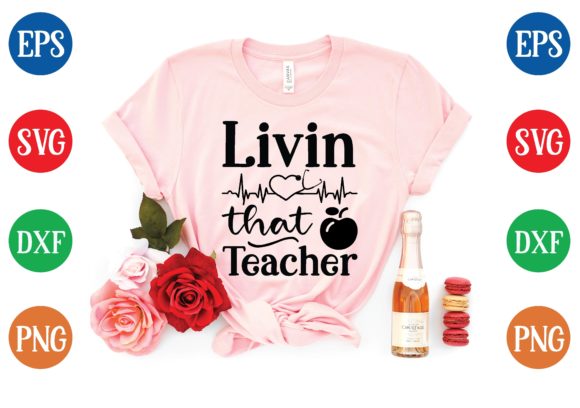
My first impression of the Livin That Teacher Svg is that it captures a modern, relatable educator aesthetic. It feels casual yet purposeful, which is exactly what current market trends demand. However, as an embroidery file, a vector graphic requires interpretation. Unlike a pre-digitized machine embroidery design, this SVG serves as a template. The bold lines suggest they were intended for clean vinyl cuts, which is actually advantageous for us. Clean vectors usually translate to smoother satin stitch columns and more defined fill stitch areas.
When I look at this layout, I immediately see it working best as an applique design or a combination of running stitch outlines with selective fill. Trying to convert the entire graphic into dense embroidery would likely result in a stiff, bulletproof patch that distorts lightweight fabrics. Instead, the visual personality of this design calls for a mixed-media approach. The typography should be handled with care; if the font is too thin, it needs to be thickened during digitizing to prevent thread breaks. If it is already bold, it is perfect for a classic satin stitch border around a felt or cotton applique background.
Real-World Application: The Educator’s Tote Bag
To truly test the viability of this graphic, I mentally placed it on a canvas tote bag—a staple item for teachers and a high-volume seller for Etsy sellers and small shop owners. In this scenario, the Livin That Teacher Svg acts as the centerpiece. Canvas has a distinct fabric texture that can swallow fine details, so the design’s inherent boldness is a major asset here.
For this specific embroidery project, I would recommend using a tear-away stabilizer behind the canvas and a water-soluble topping to keep the stitches crisp. Because the design implies a lifestyle vibe ("Livin' that teacher life"), the stitching shouldn't look overly rigid. A slightly organic edge on the applique pieces adds to the handmade product charm that buyers love. This application transforms a simple digital download into a personalized gift that feels custom-made rather than mass-produced. The contrast between the thread colors and the natural canvas creates immediate visual appeal, making the finished product highly photogenic for social media marketing and printable mockup listings.
Navigating Fabric Limitations and Hoop Sizes
While the design is versatile, it demands respect for material constraints. Not every garment listed in the "men, women, kids, baby" category will accept this graphic equally. Here is where practical design judgment comes into play:
- Baby Clothes and Thin Knits: Exercise extreme caution. Baby embroidery requires minimal stitch density to avoid irritating sensitive skin or creating holes in delicate fabric. If you adapt this SVG for a onesie, reduce the fill stitch density significantly and use a soft cut-away stabilizer. Avoid heavy satin stitches on infant wear.
- Stretchy Fabrics: For sweatshirt embroidery or performance tees, the design must be stabilized aggressively. Stretchy knits move while stitching, causing registration errors. You may need to add underlay stitches to anchor the fabric before the top layer of the Livin That Teacher Svg design lays down.
- Caps and Curved Surfaces: This graphic likely has horizontal elements that fight against the curve of a hat. If adapting for caps, consider resizing or rearranging the elements vertically. Detailed corners often get lost on curved surfaces, so simplifying the outer edges is necessary for clarity.
- Dark Fabrics: Remember that this is originally a cutting file. On dark shirts, ensure your digitizing includes adequate underlay to prevent the dark fabric from showing through lighter thread colors. Test your thread color contrast physically; what looks good on a backlit monitor might disappear on navy cotton.
Commercial Viability for Makers and Sellers
For creative entrepreneurs and craft business owners, time is money. The Livin That Teacher Svg offers excellent value because of its adaptability across multiple niches. As a T-shirt design, it targets the massive back-to-school and teacher appreciation markets. However, its utility extends beyond apparel. Consider using it for embroidered patches for staff uniforms, kitchen towels for faculty lounges, or holiday embroidery gifts for mentor teachers.
The key to selling finished products based on this graphic is presentation. Buyers trust sellers who show realistic outcomes. Do not rely solely on digital previews. Stitch out a sample on the actual substrate you intend to sell. A photo of the actual embroidery project builds customer trust far better than a flat digital image. Furthermore, verify your licensing. Just because a file is compatible with Cricut or Silhouette does not automatically grant commercial embroidery rights for finished goods. Always confirm the license terms before listing items in your Etsy shop or boutique.
Technical Notes for Successful Digitizing
Before you hoop up your best merchandise, run through this professional checklist to ensure the Livin That Teacher Svg performs as expected:
- Test on Scrap Fabric First: Never assume settings will transfer perfectly between fabric types. Test stitch density and tension on a scrap piece identical to your final product.
- Check Small Details: Inspect any tiny text or intricate icons within the graphic. If they are smaller than 4mm in height, they may need to be simplified or removed entirely to prevent needle damage and poor legibility.
- Evaluate Stabilizer Pairing: Match your stabilizer to the fabric weight. Lightweight fabrics need cut-away support; sturdy canvas can handle tear-away. Incorrect stabilization is the number one cause of puckering.
- Mockup in Black and White: Strip the color away in your software to check value contrast. If the design reads clearly in grayscale, it will read clearly in thread.
- Verify File Compatibility: While the source is an SVG, ensure your embroidery software imports the vectors cleanly without breaking nodes. Sometimes converting to DXF first yields cleaner stitch paths.
Final Thoughts on Design Integrity
The Livin That Teacher Svg is more than just a trendy phrase; it is a flexible asset for the serious maker. Its strength lies in its clean geometry and emotional resonance with the education community. By treating it as a foundational blueprint rather than a finished product, you can create custom apparel and accessories that stand out in a saturated market. Whether you are producing a single personalized gift for a favorite educator or stocking a small shop with seasonal merchandise, success comes from respecting the translation process from screen to stitch. Take the time to digitize thoughtfully, test rigorously, and present professionally. That is how you turn a simple download into a sustainable embroidery business asset.