Teaching Makes Me Happy: An Embroidery Design Review
First Impressions for Apparel and Gift Projects
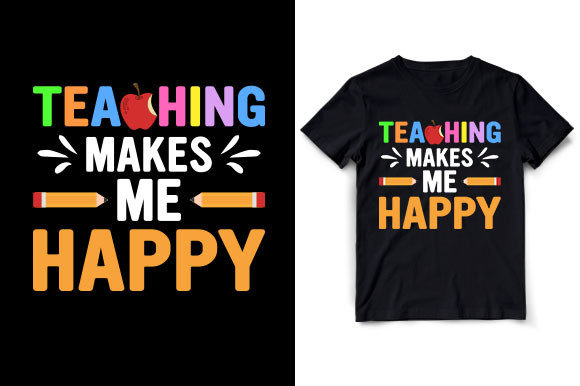
When evaluating Teaching Makes Me Happy for potential use in a production environment or a custom client order, my first focus is always on the emotional resonance and structural integrity of the artwork. As a designer who regularly bridges the gap between digital graphics and physical thread, I look for assets that translate well from screen to fabric. This particular design carries a warm, approachable sentiment that immediately signals its best use cases: appreciation gifts, staff uniforms, and personalized merchandise for educators. The phrase itself is universally positive, but as an embroidery professional, I am less concerned with the slogan and more focused on how the typography and layout will behave under the needle.
The provided files include high-resolution print-ready assets like SVG, EPS, and transparent PNGs at 300 DPI. While these are excellent for direct-to-garment printing or creating crisp printable mockups for an Etsy listing, they serve a different purpose for us embroiderers. For a machine embroidery design, these vector and raster files act as the ultimate reference map. They allow me to verify line weight, spacing, and overall balance before I ever open digitizing software or load a hoop. The clarity of the 4500×5400 resolution means I can zoom in to inspect the intended thickness of the lettering, ensuring that if I am recreating this as a stitch file, I maintain the designer's original vision without losing detail to thread tension issues.
Real-World Application: Stitching a Teacher Appreciation Tote
To truly judge the viability of Teaching Makes Me Happy, I recently approached it with a specific project in mind: a canvas tote bag intended as an end-of-year gift for a kindergarten teacher. Tote bags present unique challenges because canvas has a distinct weave that can swallow fine details, yet the item needs to feel substantial and handmade. In this scenario, the design’s layout is critical. If the text is too sprawling, it risks wrapping around the curved side seams of the bag when worn. If it is too condensed, the stitch density might become too heavy for the fabric, causing puckering even with proper stabilization.
For this tote bag project, I treated the graphic source as a guide for a combination of techniques. The main sentiment works beautifully as a fill stitch block to ensure readability against the textured canvas, while smaller decorative elements could be rendered in a running stitch to add visual interest without adding excessive bulk. This approach transforms a standard graphic into a tactile embroidered patch effect directly on the bag. When considering this for custom apparel like sweatshirts or t-shirts, the same logic applies. The design must breathe. On a fleece sweatshirt, the loft of the fabric requires slightly wider column widths in the digitizing to prevent the stitches from sinking into the pile. Seeing the high-quality JPG and PNG references helps me determine exactly where to adjust compensation so the final finished product looks professional rather than homemade.
Navigating Fabric Limitations and Hoop Constraints
While Teaching Makes Me Happy is versatile, experienced makers know that not every surface is suitable for every design. When planning sweatshirt embroidery or items for babies, caution is necessary. Baby clothes and lightweight tees often feature stretchy knits that distort easily. If the design features dense satin borders or large fill areas, it can create a stiff "bulletproof" patch effect that is uncomfortable against skin and prone to warping the garment. In these cases, I would recommend modifying the design to be lighter, perhaps using an applique design technique where fabric pieces form the letters, reducing the total stitch count and maintaining the drape of the garment.
Dark fabrics also demand strategic planning. Since the provided files are likely optimized for print, they may not account for the contrast needed in thread. White or cream thread on a navy shirt reads differently than black ink on white paper. Before committing to a full production run of commercial embroidery, it is vital to test thread colors against the actual garment material. Furthermore, small hoop sizes can limit the scale of this design. If you are working with a 4x4 hoop, you may need to split the design or resize it significantly. Resizing vector-based graphics is easy, but resizing embroidery files can distort stitch angles. Always verify your hoop size capabilities against the desired final dimensions before purchasing or digitizing.
Elevating Brand Value and Customer Trust
For Etsy sellers and small business owners, the presentation of T-Shirt Designs and Graphics is just as important as the stitching itself. Using the included high-DPI transparent PNG allows you to create realistic digital previews that set accurate expectations. However, nothing builds buyer confidence like showing the texture of real thread. When I list a handmade product featuring this design, I make sure to photograph the embroidery at an angle that catches the light, highlighting the sheen of the rayon or polyester threads. This visual proof assures customers that they are receiving a quality personalized gift rather than a cheap heat transfer.
Consistency is key for boutique branding. If you offer Teaching Makes Me Happy across multiple products—mugs, shirts, and towels—the design should feel cohesive. The digital assets provided help maintain this consistency in your marketing materials, while your attention to stabilizer selection and tension ensures consistency in the physical goods. A well-executed embroidery project communicates professionalism. It tells the buyer that you understand the medium and respect the sentiment behind the phrase. Whether it is for holiday embroidery campaigns or back-to-school sales, treating this design with technical care elevates its perceived value.
Essential Technical Checks Before You Stitch
Before loading this design into your machine or listing it in your shop, run through this practical checklist to avoid costly mistakes:
- Verify Licensing: Confirm whether your purchase includes commercial rights for selling finished embroidered items or if it is limited to personal use and digital printing.
- Test on Scrap Fabric: Never stitch directly onto a final product without testing. Use a scrap of the exact fabric and stabilizer combination you plan to use to check for puckering or registration errors.
- Check Small Details: Inspect any tiny accents in the design. If they are thinner than 1mm, they may need to be converted to running stitches or removed entirely to prevent needle breaks and thread bunching.
- Review Contrast: Print the design in black and white or view the digital file in grayscale to simulate how it might look with low-contrast thread choices. Adjust colors if the text becomes hard to read.
- Confirm File Compatibility: Remember that SVG and EPS are vector formats. Ensure you have the correct digital embroidery file format (like PES, DST, or JEF) for your specific machine, or budget time for professional digitizing based on the provided art.
- Mockup Accuracy: When using the 300 DPI JPG for listings, clearly label it as a digital preview if you haven't stitched it yet. Misleading customers with print mockups for embroidered items leads to returns and negative reviews.
Ultimately, Teaching Makes Me Happy is a strong candidate for craft business inventories and personal projects alike, provided it is handled with the technical respect embroidery demands. By leveraging the high-quality source files for accurate digitizing and marketing, and by applying sound construction principles during production, you can turn this graphic into a beloved, tangible asset for teachers everywhere. The success of the project lies not just in the happy sentiment, but in the deliberate, skilled execution of the maker.